
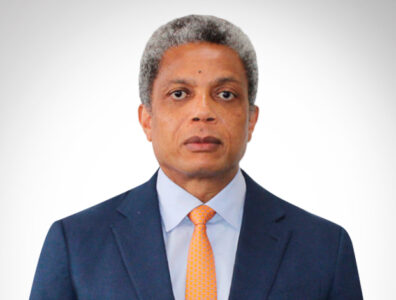
Lekan Aluko, CEO of PetroVision, talks to The Energy Year about Africa’s upstream investment outlook and the commercial and fiscal factors required to optimise the bankability of energy projects. PetroVision is an energy consultancy firm with offices in Cape Town, Lagos and London.
PetroVision is an energy consultancy firm with offices in Cape Town, Lagos and London.
- Geology alone no longer attracts upstream capital. Projects also require competitive economics, predictable governance and fiscal terms that give investors long-term confidence.
- African jurisdictions are competing through their investment frameworks. Regulatory clarity, fiscal incentives and manageable permitting requirements will strongly influence where capital is deployed.
- Collaboration can unlock marginal and complex fields. Shared infrastructure, integrated development concepts and alternative processing or evacuation arrangements can improve otherwise weak project economics.
How do you assess Africa’s upstream investment outlook?
Africa remains among the most interesting regions for upstream oil and gas and energy investment. Untapped resources, growing domestic energy demand, and increased exploration and production activities are attracting investors. However, for investments to work, projects also need competitive economics and stable, predictable governance to attract capital.
Many African governments are trying to improve regulatory and fiscal frameworks. Nigeria, Namibia, Angola, Egypt and Algeria are examples where incentives for long-term gas developments and deep offshore exploration are becoming important. Governments have to ensure investor confidence to attract the right capital.
The opportunity is across the continent. Nigeria is mature, but there are still many opportunities in deeper waters. Namibia and Mozambique have had large discoveries recently, and Algeria has huge gas resources waiting to be unlocked. South Africa has offshore and onshore potential, but operators have strict environmental legislation to overcome. The capital will flow where the right incentives are in place. Fiscal competitiveness and regulatory clarity matter as much as geology.
What are the most important factors influencing the bankability of projects today?
Technical excellence by itself is no longer enough. Projects need commercial realism, strong economics and an optimised value chain. This is where independent technical and commercial advisors come in, because the work has to look at the whole picture and not only the reservoir.
When PetroVision started, we were predominantly an engineering and geosciences company. Over the years, we expanded into commercial and financial advisory, evacuation solutions, infrastructure and ESG, enabling us to evaluate projects across the entire value chain. That integration is key. We are now helping clients optimise production and economics, making sure their projects meet energy sustainability requirements and are bankable.
Many small, marginal and complex fields in Africa are not economically viable by themselves, but once you bring in innovative solutions, integrated development concepts, collaboration and shared infrastructure, project outcomes can improve. We scrutinise the options and advise clients on the optimal solutions.
That requires scenario testing. Answers depend on where the asset sits, the development options, how hydrocarbons will be evacuated, whether processing facilities can be shared with neighbours and whether stand-alone development makes sense. We also stress-test projects against changing conditions.
What role will technology play in unlocking Africa’s resources?
Technology is extremely important because many African basins are already very mature. Going forward, extracting hydrocarbons will be more challenging and will require faster, more accurate technology.
The industry is acquiring much more data, but to interpret it, you need the right tools. PetroVision has in-house asset modelling software with the fiscal regimes of more than 40 countries embedded in it, and we have built partnerships around the technologies our clients need, such as enhanced seismic imaging and high-performance computing from DUG Technology, data management solutions from Troika International and Echelon high-speed reservoir simulation software from Stone Ridge Technology.
The industry is undergoing a technological shift driven by AI and high-performance computing. These technologies generate the greatest value when combined with strong local expertise. While technology evolves rapidly and geology evolves over millions of years, the fundamental physics governing reservoirs remain unchanged. Clients are increasingly open to adopting these technologies to accelerate workflows and improve decisions, but technology should enhance and not replace professional judgement. Experienced geoscientists and engineers must interpret and validate the results to ensure decisions are not only faster, but also more accurate and reliable.
How are midstream, downstream and transition opportunities changing PetroVision’s work?
Governments, NOCs and financial institutions across Africa want to create and retain more value on the continent. That means more oil refining and processing, more midstream infrastructure and larger investments in petrochemicals.
We are also seeing strong support from African finance institutions for projects that generate greater value from commodities within Africa. This priority has been reinforced by the new leadership of Afreximbank, which focuses on financing value-added industrial and energy projects.
When PetroVision started, we were purely upstream, but now we follow the molecule into the midstream and downstream to ensure that as many projects as possible can be launched on the continent, while also making sure they are the right projects. Large-scale refining developments have demonstrated that Africa can successfully deliver world-class industrial projects, creating greater value from its natural resources on the continent. We are supporting transactions to take over petrochemical plants or refineries to enhance capacity.
Oil and gas will continue to underpin economic investment and industrialisation, but Africa also offers major opportunities in critical minerals and rare earths, as well as CCS and hydrogen. Many oil and gas skills can be directly transferred to emerging industries, and infrastructure and reservoirs can be repurposed. Capturing new streams will be about adaptation and evolution.
Where would you like PetroVision to be in five years?
I would like PetroVision to be seen as a leading integrated energy consultancy that is helping to shape Africa’s future. Our goal is to support clients today in making sustainable investment decisions for tomorrow.
That will mean continuing to bring together the technical, commercial, financial and ESG sides of energy projects, understanding whether the resource is attractive, whether the economics are competitive, whether the governance and fiscal framework are predictable and whether the project can be executed quickly and responsibly.
We do not just study reservoirs; we follow the entire chain to optimise the value extracted from hydrocarbons. At PetroVision, we follow the molecule and the capital, and ultimately create sustainable value. That philosophy will continue to define PetroVision as we support clients across the entire energy value chain. That may involve advising on licensing rounds, asset acquisitions, portfolio optimisation, midstream and downstream infrastructure, and energy transition services.
At PetroVision, we believe that future barrels will be increasingly intelligent – found and developed through better data, advanced technologies, integrated interpretation and stronger collaboration.
Africa has strong oil and gas opportunities and has the chance to grow transition industries at the same time. Our vision is to help shape Africa’s energy future through independent, integrated energy advisory, combining deep African expertise, advanced technologies and commercial realism to enable smarter, more sustainable energy investment decisions that create lasting value for our clients and the continent.